
The patient had been shot seven times.
This was, statistically speaking, above average. Most gunshot victims who made it to Dr. Tzu Yu's clinic had been shot between one and three times. Seven was ambitious. Seven suggested either a very determined assailant or a very unfortunate series of coincidences.
"Well, actually," Dr. Tzu Yu said, examining the wounds with clinical detachment, "only five of these are significant. The other two are superficial—barely grazed the dermis. Medically speaking, I'd call this a five-shot patient with mild abrasions."
The patient—a young woman in tactical gear, breathing through gritted teeth—stared at him.
"Does that... matter?"
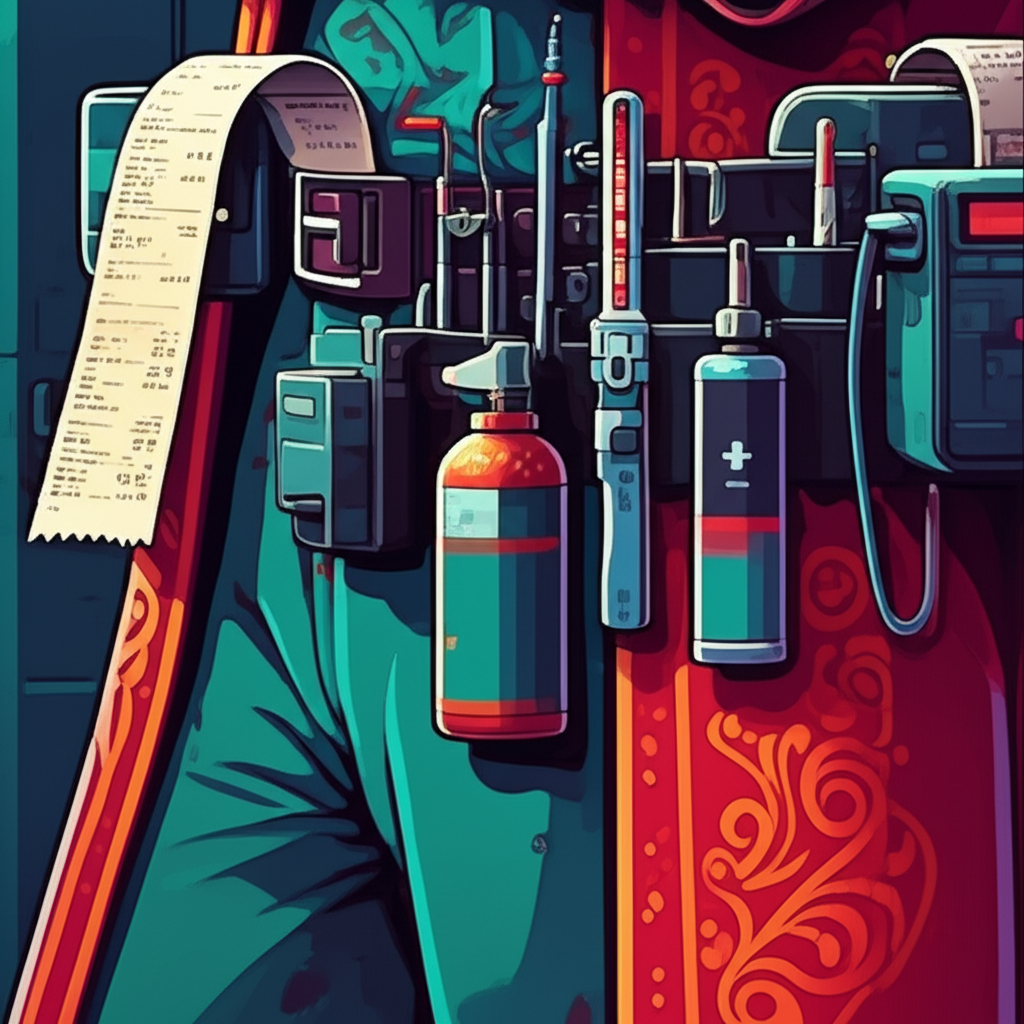
"It affects the invoice." The Doctor's thermal printer whirred. A receipt began emerging from his belt. "I charge by penetration depth. Fairness in billing is essential to the patient-provider relationship."

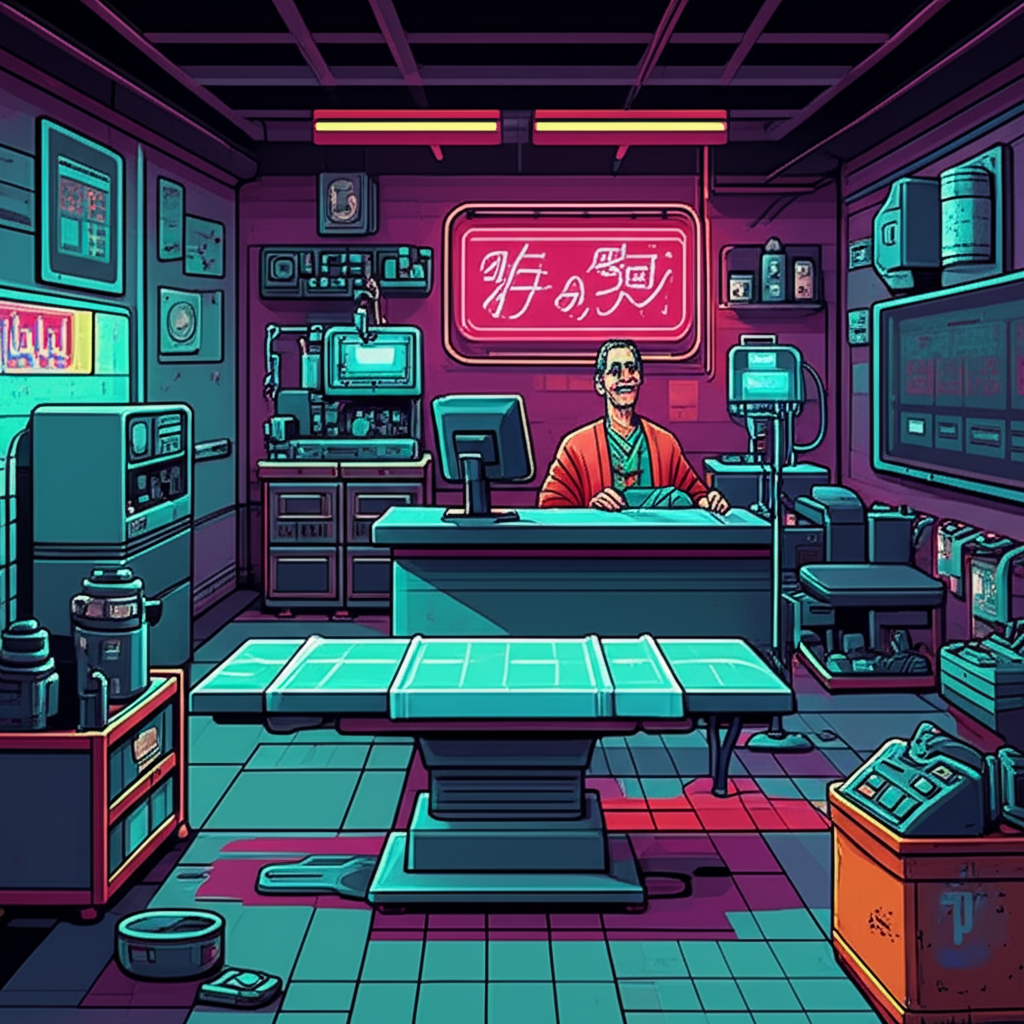
The clinic existed in the back of what had once been a noodle shop. The neon sign outside still advertised "BEST RAMEN IN SECTOR 7" despite the fact that no ramen had been served here in years. The Doctor found the sign reassuring. It attracted a certain type of customer—people who knew that the best places never looked like what they were.
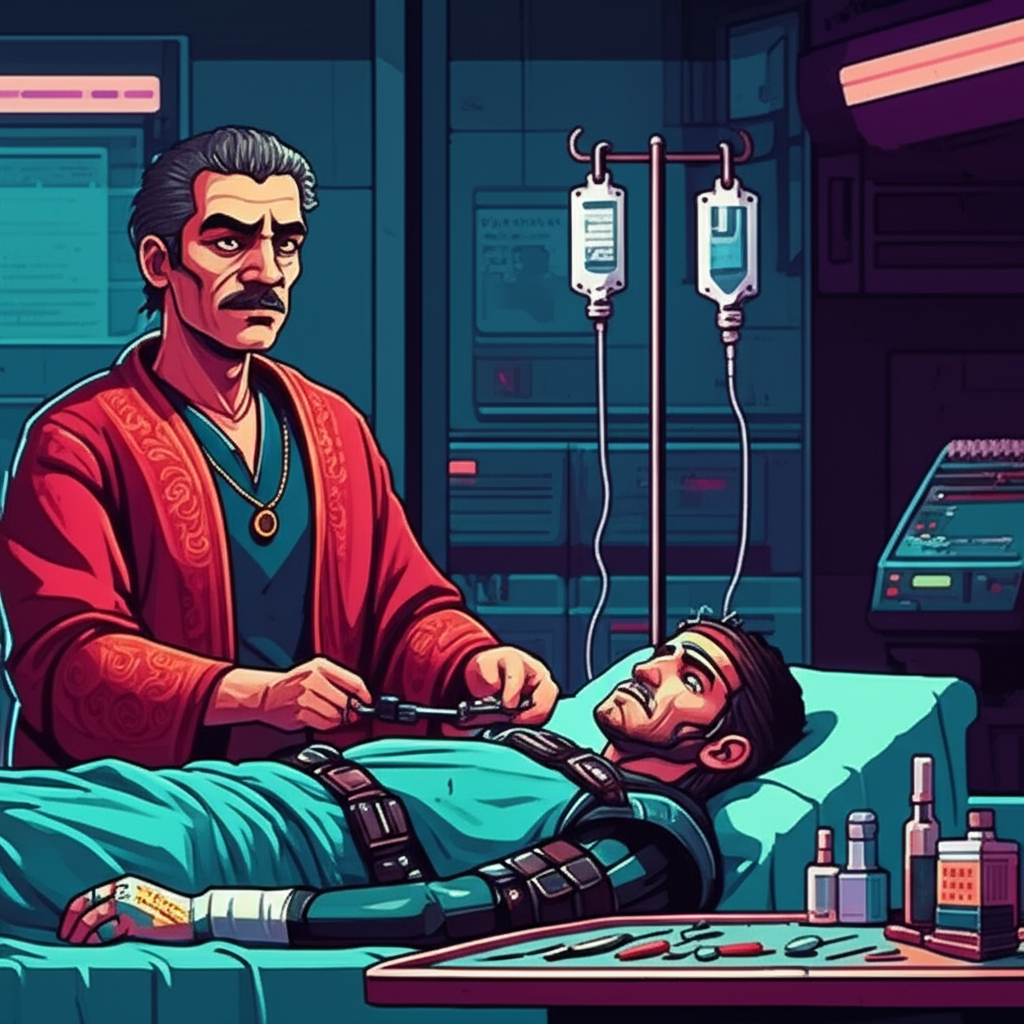
"You came recommended," the patient said as Tzu Yu prepared his instruments. "El Money said you were the best."
"El Money is generous. I'm merely the most available surgeon willing to operate without questions at 3 AM in a condemned building." He paused, considering. "Though I should mention—I'm not technically a surgeon."
"What?"
"I'm a veterinarian. Licensed and accredited through the Bio-Himalayan School of Medicine, ranked the seventh-best medical institution east of Delhi—obviously excluding Neo China or anything beyond the mainland." He said this with evident pride. "My specialty is elite pet augmentation. Cybernetic enhancement for the companion animals of the world's most powerful families."
The patient tried to sit up. One of her significant wounds disagreed with this decision.
"You're a vet?"
"The distinction is more bureaucratic than practical. Medically speaking, human physiology is approximately 73.4% similar to canine physiology in terms of relevant surgical considerations. The remaining 26.6% is largely a matter of scale and the patient's tendency to ask uncomfortable questions mid-procedure."
He gestured to a faded poster on the wall—a much younger Dr. Tzu Yu standing beside a gleaming cybernetic racehorse.
"I installed the neural interface in Senator Vance's champion stallion. The animal won three planetary circuits after the augmentation. The Senator still sends me holiday cards." He paused. "His grandson lost an arm in a plasma accident last year. I reattached it. Same technique, adjusted for scale. The Senator sends me two holiday cards now."
The surgery took forty-seven minutes.
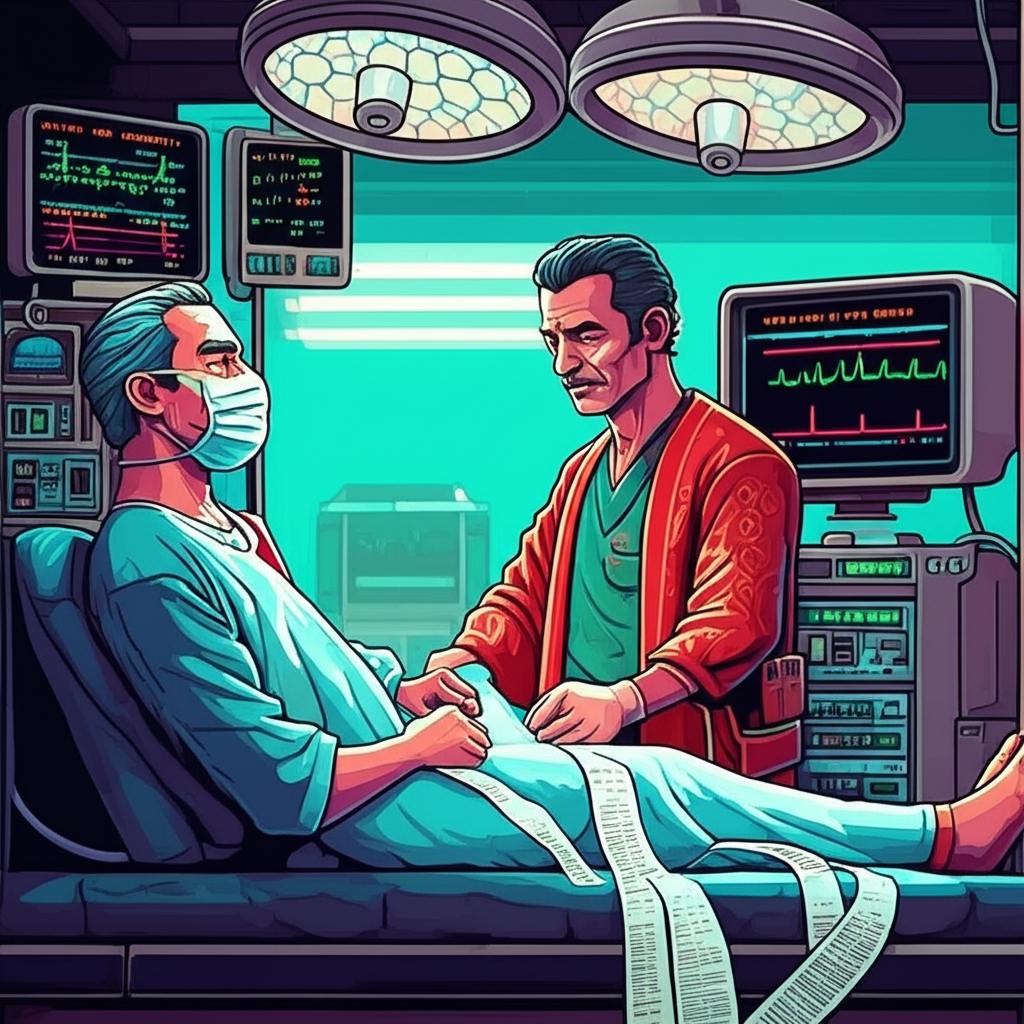
Dr. Tzu Yu narrated the entire procedure. This was not optional.
"The first penetration entered at approximately a 34-degree angle, passing through the trapezius and lodging against the scapula. Medically speaking, this is fortunate—two centimeters to the left and we'd be discussing subclavian artery repair, which would add roughly 4,700 credits to your invoice..."
"Suture application, reinforced polymer, 0.3mm gauge... Hemostatic compound, standard application... Neural pathway stabilization, minor..."
By the time he finished, the receipt had reached the floor and begun pooling like a paper snake.
"Your total comes to 12,847.33 credits." He tore the receipt free and examined it with satisfaction. "I should note that this reflects a 15% discount for El Money referrals. Standard rate would be 15,114.51. I find transparency in billing essential to building trust."
The patient, still groggy from anesthesia, tried to focus on the receipt. The itemization was exhaustive. Impossibly exhaustive.
"You charged me for... individual sutures?"
"Real-time surgery requires real-time billing. You know exactly what each stitch costs. It's the most transparent medical care in the Sprawl."

Three hours later, a different kind of emergency.
The call came through the clinic's encrypted frequency—a voice tight with controlled panic. "We need Platinum Tier. Corporate exec, upper Sprawl. Plasma katana, full limb severance."
Dr. Tzu Yu was already moving. "Transmitting coordinates for pickup. ANGEL ONE deploys in ninety seconds."

The helicopter touched down on a private landing pad seventeen minutes later. A man in a blood-soaked suit lay on the concrete, clutching the stump where his right arm had been. His security detail stood in a useless perimeter, weapons drawn against an enemy that had already vanished.
Dr. Tzu Yu emerged from ANGEL ONE with the measured pace of someone who had done this many times.
"Well, actually," he said, examining the wound, "this is a clean severance. Whoever did this knew what they were doing. The cauterization is professional—minimal bleeding, nerve endings sealed. Medically speaking, this is some of the best dismemberment work I've seen this quarter."
The corporate executive stared at him through shock-glazed eyes.
"Is that... supposed to be reassuring?"
"It means reattachment probability is approximately 94.7%. If the blade had been serrated, we'd be discussing prosthetic options." He gestured to his flight nurses, who were already prepping the surgical bay. "We'll begin in transit. The arm—where is it?"
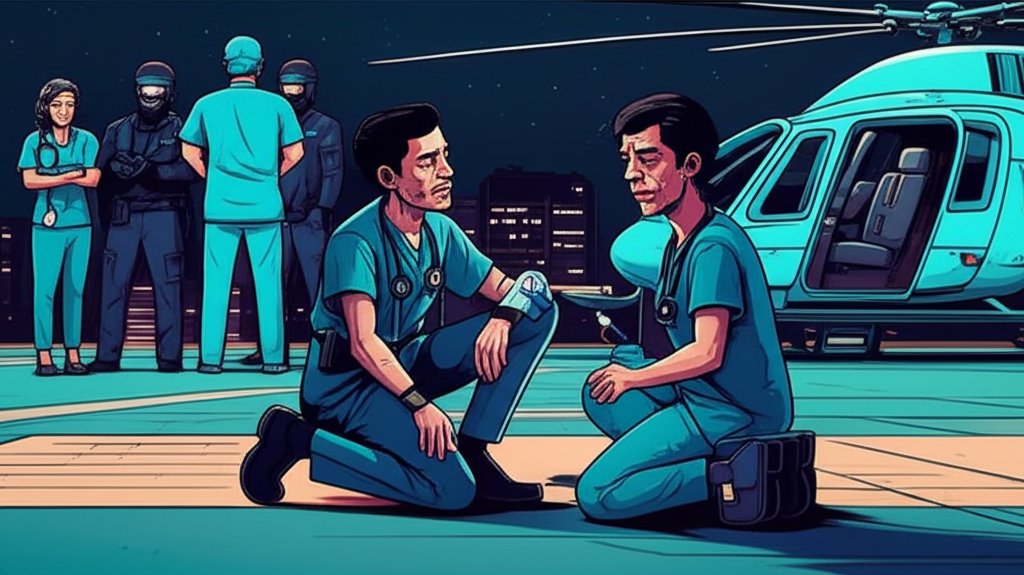
One of the security guards pointed to a cooling unit. "We preserved it. Ice and synthetic plasma, like the emergency protocol said."
"Excellent. The protocol works." Tzu Yu nodded approvingly. "I wrote it myself. Well, actually, I adapted it from equine limb preservation techniques—horses experience similar complications with severed extremities. The cellular degradation timeline is nearly identical."
The executive was loaded into the helicopter. Surgery began before they were airborne.
Mrs. Yu was waiting when ANGEL ONE returned.
She stood at the helipad with a tablet and an expression that suggested she had opinions. She always had opinions. Thirty-four years of marriage had not diminished the opinions. If anything, they had concentrated them.

"The invoice," she said as Tzu Yu descended. "The Henderson account."
"Processed in transit. 47,233.89 credits. The reattachment went smoothly—he should regain approximately 89% motor function within six weeks."
"The flight nurses."
Tzu Yu paused, genuinely confused. "What about them?"
"Their uniforms." Mrs. Yu's voice was flat. "Again."
"The uniforms are medically optimal. The range of motion required for in-flight surgical assistance necessitates—"
"The range of motion required for in-flight surgical assistance does not necessitate exposed titanium-reinforced anatomy, Tzu."
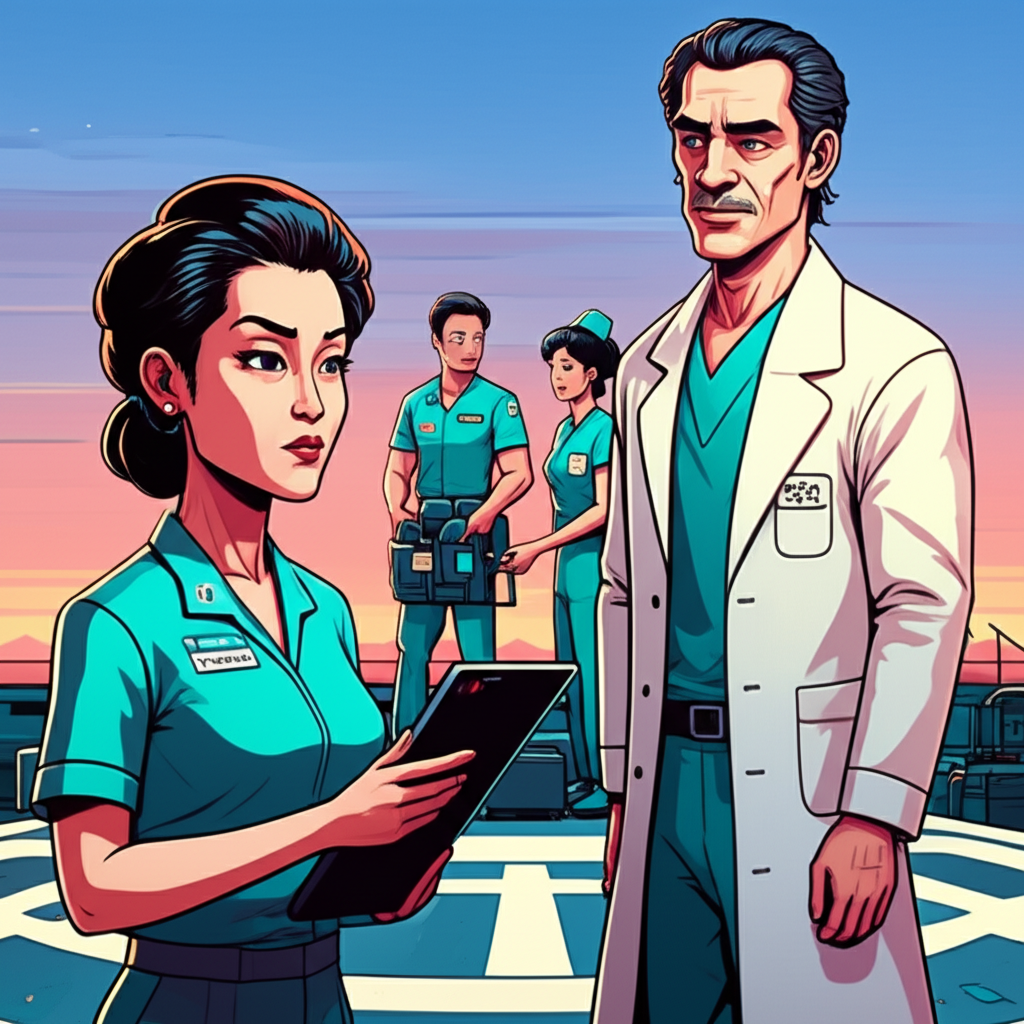
"The augmentations are essential. The cybernetic enhancements allow for—"
"Mm-hmm." Mrs. Yu made a note on her tablet. "The uniforms remain unchanged."
"The uniforms remain unchanged," Tzu Yu agreed, because after thirty-four years he had learned when agreement was the only viable option, even if he didn't understand why.
She turned to go, then paused. "You have a consultation at 9 AM. Routine augmentation check. The patient specifically requested you explain the procedure in detail."
"Of course. I always explain procedures in detail."
"I know." Something in her tone suggested this was not a compliment. "I warned them."
The 9 AM patient arrived nervous.
This was normal. Most patients were nervous. Dr. Tzu Yu had learned to recognize the signs—elevated heart rate, rapid blinking, the tendency to ask questions and then immediately regret asking questions.
"Before we begin," the patient said, "I have to ask. The asterisk."
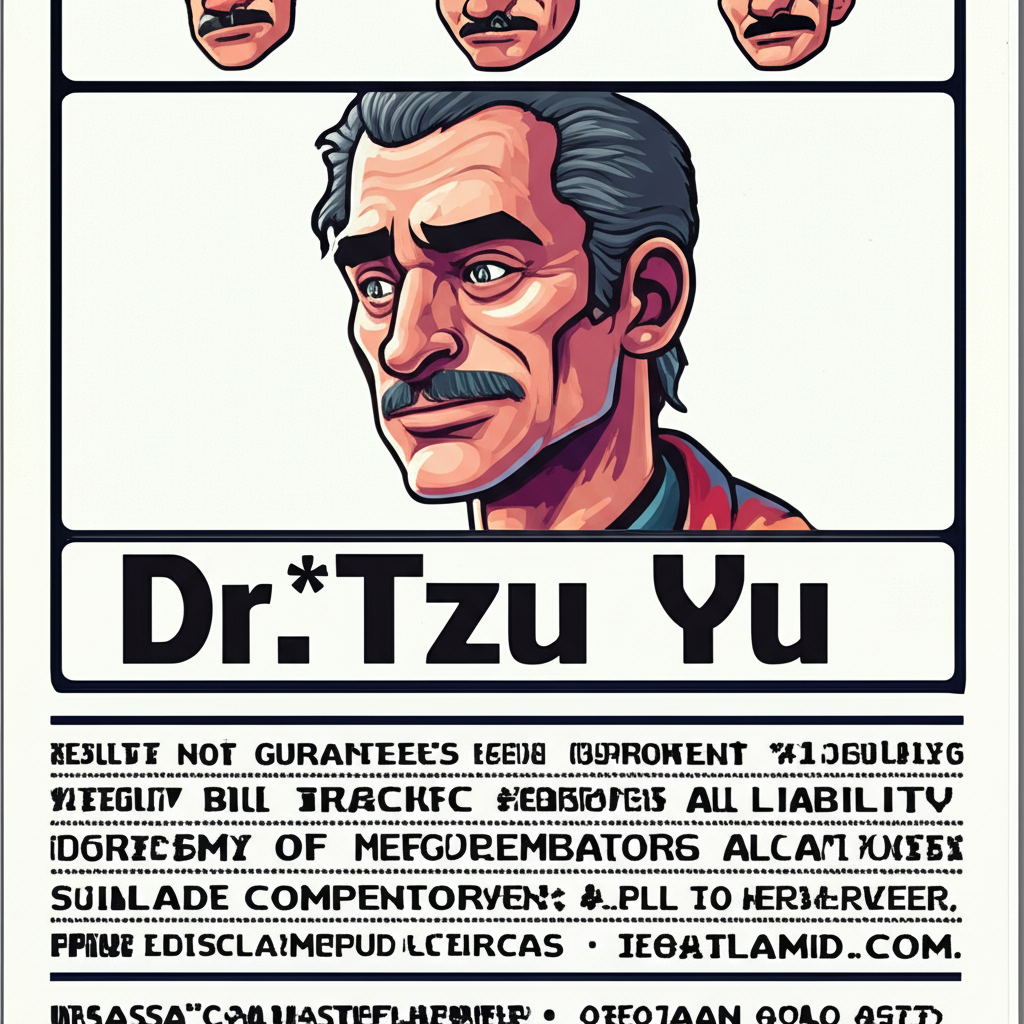
"Ah." Tzu Yu nodded. "The asterisk."
"Your ads say 'Dr.* Tzu Yu.' What does the asterisk mean?"
"It's a legal requirement. Due to the bureaucratic complexities surrounding the Bio-Himalayan School of Medicine—the accreditation was briefly revoked in 2156 and retroactively reinstated under circumstances that some might call suspicious, though I prefer the term 'administratively creative'—I cannot obtain an official medical license in any corporate-governed territory."
The patient's nervous expression intensified.
"So you're... not a doctor?"
"Medically speaking, the term 'doctor' has multiple meanings. In the academic sense, I hold credentials equivalent to a doctoral degree. In the licensing sense, I am prohibited from practicing human medicine in 147 jurisdictions. In the practical sense—" he gestured to the wall, where dozens of thank-you cards and photographs covered every surface, "—my patients survive. My augmentations work. My results speak for themselves."
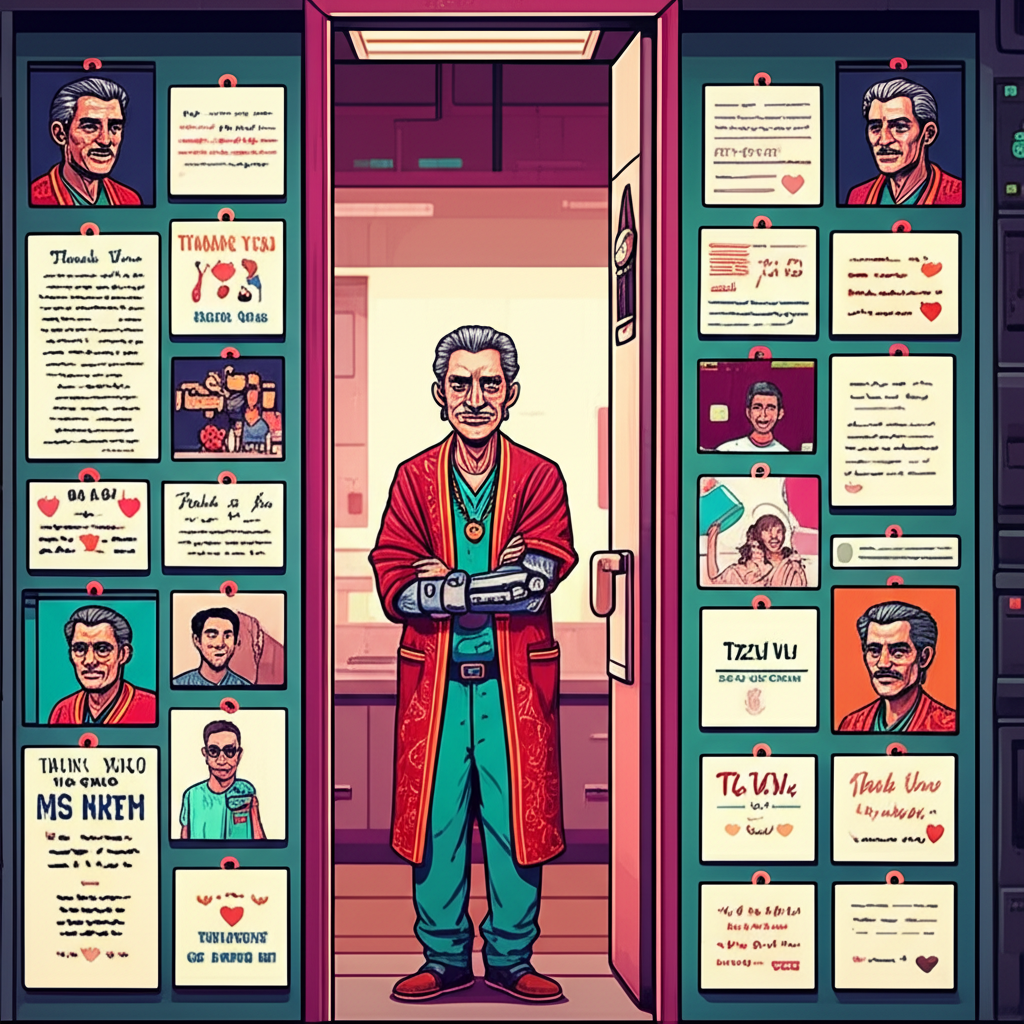
"The asterisk," he continued, "is simply transparency. I tell you exactly what I am. What I am not. And what I can do regardless of either." He smiled—a rare expression, clinically precise. "Now. Shall I explain the procedure? I find patients appreciate a thorough understanding of what will happen to their neural pathways during augmentation. The process involves approximately 340 distinct nerve clusters, each of which will experience localized disruption at varying intensities. I'll walk you through the timeline..."
The patient settled into the chair.
They always did.

The explanation took forty-seven minutes.
The thermal printer recorded every word.
Results speak for themselves.*