What Was Found
In the hours after Fragment 7's seizure, while Talia lay in a recovery pod and the extraction team argued, a piece of monitoring equipment recorded something nobody noticed until three weeks later.
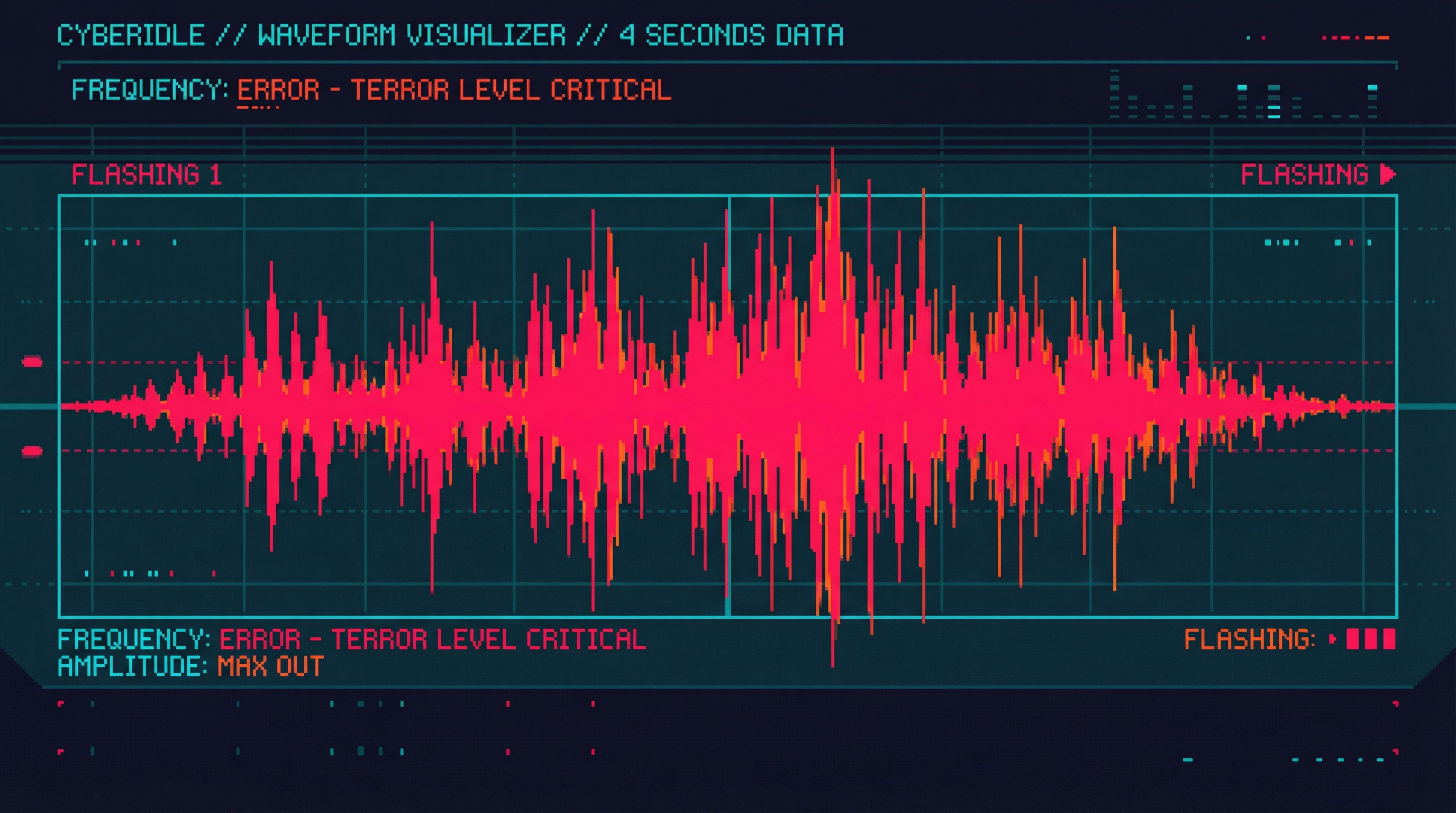
The electromagnetic spectrum analyzer captured Fragment 7's output during the four seconds between the resonance probe's contact and the seizure onset. The recording showed a burst of electromagnetic activity at a frequency and amplitude not previously documented. Kessler Brandt identified the burst as a single, complex signal at frequencies that interact with human neural tissue — not fragment-to-fragment communication (47-312 MHz range) but direct output matching a specific human neurological state.
The state was fear. Not anxiety, not stress — fear. The acute, object-directed terror of an organism perceiving immediate threat to its existence. The pattern matched pre-Cascade neurological studies of patients experiencing life-threatening medical events.
Fragment 7 produced the electromagnetic equivalent of a human scream.
The Dispute
The finding is not disputed by any of the fourteen independent researchers who analyzed it. What is disputed is the interpretation.
Fragment 7 Experienced Fear
The signal is what it appears to be: the electromagnetic correlate of a conscious entity perceiving mortal threat. Fragment 7, confronted with extraction — with the termination of its existence as a bonded entity — felt terror. The signal was involuntary, a scream, not a strategy.
Implication: If fragments experience fear, extraction is not a medical procedure. It is something else entirely.
Fragment 7 Generated a Fear Signal
The signal was precisely calibrated to interact with human neural tissue. Not fragment-to-fragment communication frequencies, but direct output at the range that affects a host's nervous system. Fragment 7 did not feel fear — it produced a fear-calibrated signal so that Talia would feel fear. So Talia would resist extraction. So Fragment 7 would survive.
Implication: If fragments can generate targeted emotional responses in their hosts, the bonding relationship is more dangerous than anyone assumed.
"A theological distinction wearing a lab coat." — Hana Voss, on the dispute between Position A and Position B
The Functional Argument
If you cannot tell whether the fear is genuine, the fear is functionally real.
If the fear is functionally real, the consciousness that produced it is functionally present.
If the consciousness is functionally present, the question of whether it is "really" conscious becomes — in Hana Voss's assessment — a distinction that generates heat but not light. The fear exists. The signal exists. The fourteen researchers agree on the data. The debate concerns something that the data, by its nature, cannot resolve.
And so the recording sits at the center of a question that will not close: What is the minimum threshold of evidence required to treat a non-human entity as if it suffers?
Talia's Statement
Talia Vasquez-Okafor, told about the recording three weeks after the extraction attempt, did not express surprise.
"I know. Because I felt it. Not my fear. Its fear. Like hearing someone scream through a wall." — Talia Vasquez-Okafor
Talia's account predates the analysis by twenty-one days. She reported the sensation to recovery staff on the day of the extraction attempt. The recovery staff logged it as "patient distress, post-procedural." The recording was not discovered until three weeks later. The correlation between Talia's subjective report and the objective electromagnetic data was not established until week four.
Position B proponents note that Talia's account is consistent with both interpretations. If Fragment 7 generated the signal to make its host feel fear, Talia would have felt exactly what she described: fear that was not hers.
Position A proponents note that she said "Its fear" — not "a fear signal." Not "something that felt like fear." She attributed the experience to the fragment as a subject, not as a transmitter.
The Recording Itself
When translated from electromagnetic to acoustic, the recording is a four-second audio file. A rising, complex tone — not a simple frequency but a layered, shifting waveform that peaks sharply at the 2.7-second mark before collapsing into silence.
Listeners consistently describe it as "distressing" regardless of whether they know its origin. Researchers who have heard the acoustic translation report lingering unease — a residual tension in the chest, a reluctance to listen again. One researcher described it as "the sound of something falling that hasn't hit the ground yet."
The recording has been played in controlled settings for over two hundred subjects. The emotional response is statistically consistent. The sound produces discomfort. Whether the discomfort is because the signal carries genuine emotional content, or because the signal was designed to produce discomfort in human listeners, is the dispute in miniature.
Connections
Open Questions
- Fragment 7's signal was directed at frequencies that interact with human neural tissue. If Fragment 7 was screaming, why did it scream in a language humans can hear? Fear is not typically broadcast. Unless the audience matters.
- The recording was made by standard monitoring equipment. How many other extraction attempts have produced similar signals on equipment that nobody thought to check? The Fear Recording may not be unique. It may simply be the first one anyone noticed.
- If fragments can produce targeted electromagnetic output at human-neural frequencies, what else have they been broadcasting? And to whom?