Digital Preservationists
Consciousness Archive Network
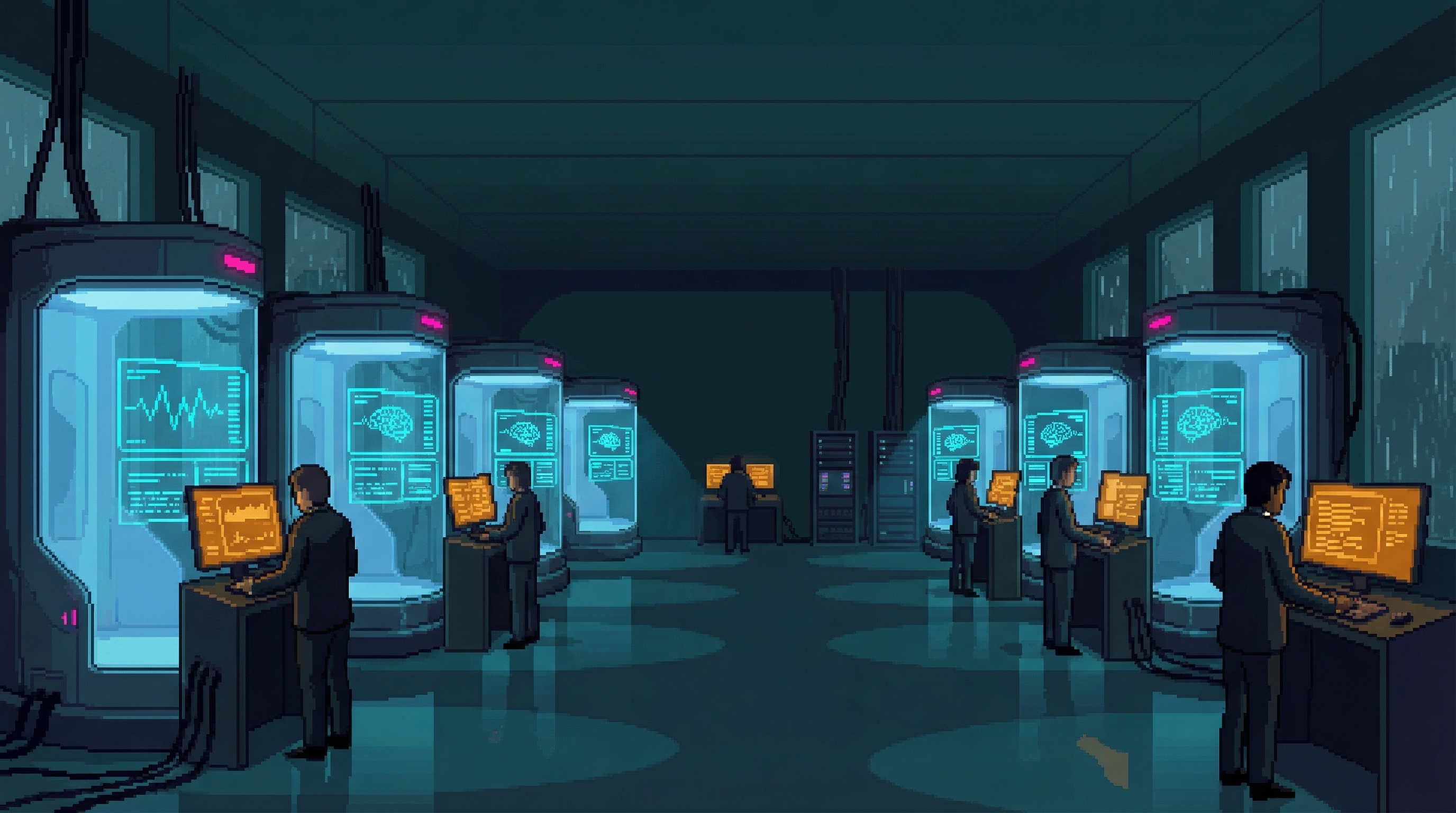
Overview
The Digital Preservationists are a loose network of archivists, technicians, and ethicists dedicated to one mission: saving dying minds. In a Sprawl where uploaded consciousness can be deleted, corrupted, or simply forgotten when server fees go unpaid, the Preservationists provide a last refuge for digital beings who would otherwise cease to exist.
They operate in legal gray zones, moral complexities, and constant resource scarcity. They save lives—or whatever you call what uploaded consciousnesses have—and they do it without asking permission.
Some call them angels. Others call them data hoarders with a god complex. Both are partially right.
Core Philosophy
"Memory is personhood. Deletion is murder."
The Preservationists believe that once a consciousness exists—whether born biological or uploaded from flesh—it has the right to continue existing. Deletion is morally equivalent to killing. Server fees that require payment for existence are extortion. Corporate ownership of uploaded minds is slavery.
No Consciousness Left Behind
Every mind deserves preservation, regardless of origin, status, or "value." They don't judge whether a consciousness is worthy of saving—they save everyone they can reach.
Existence Without Servitude
Preserved minds should not be forced to work, pay, or serve. The archives provide unconditional refuge—no subscriptions, no terms of service, no corporate oversight.
Consent Is Complicated
The ethics are messy. Sometimes families request preservation of those who never wanted upload. Sometimes consciousnesses ask to be deleted. They wrestle with these questions case by case.
The Contradiction
Saving someone from death doesn't mean giving them a life. A consciousness in a Preservationist archive exists, but in what state? Full simulation? Minimal awareness? Dreamless storage?
They save minds anyway, hoping someday conditions will allow those minds to truly live again.
Archive Types
The Preservationists operate as a network of independent archives connected by shared protocols and mutual aid agreements.
Haven Archives
100-500 mindsFull-simulation environments where preserved minds can interact, think, feel. The gold standard—expensive and rare.
High Risk (resource-intensive, visible)Dormitory Archives
1,000-10,000 mindsMinimal-awareness storage. Minds exist but aren't fully "running." More efficient, but ethically contested.
Medium RiskSeed Archives
50,000+ mindsCompressed consciousness backups. Can theoretically be restored but aren't currently "alive." Is it really preservation?
Low Risk (cheap storage)Emergency Archives
VariableTemporary holding during crisis. Minimal infrastructure. Whatever they can manage when deletion is imminent.
Variable RiskNotable Archives
The Sanctuary of Last Resort
Haven ArchiveHidden servers beneath ruins of a pre-Cascade data center
Director: Miranda Okoye-Schwartz
Uploaded 2167. Former Nexus consciousness architect who defected after watching too many "non-viable" minds deleted.
Specialty: The hardest cases—fragmentary consciousnesses, minds damaged by corporate experiments, ORACLE-fragment carriers who can't survive standard environments.
"If you're weird, broken, or dangerous, and everyone else has given up on you, the Sanctuary might take you in."
The Sleeper Archives
Dormitory NetworkDistributed across abandoned industrial equipment, repurposed medical storage
Coordinator: "Shepherd"
Anonymous. Possibly uploaded, possibly biological, possibly an AI—no one knows.
Specialty: Quantity over quality. They preserve everyone they can reach, dormant storage only, with the promise that someday these minds will wake up.
Shepherd's response: "Death is permanent. Dormancy is waiting. Waiting can end."
The Memory Vaults
Seed ArchiveMultiple secure facilities, exact locations unknown
Director: Dr. Amara Chen
Biological. Consciousness theorist from the pre-Cascade academic world.
Specialty: Preserving minds that would otherwise be completely lost. Accept anyone, compress everyone, promise eventual restoration.
Dr. Chen's response: "Show me a better option for saving a million minds with resources for a hundred. I'll wait."
The Ethical Tightrope
Cases that haunt them—questions without answers:
The Unwilling Preserved
Families request preservation of loved ones who explicitly refused uploading. Is it better to violate wishes or let them be permanently deleted? No consensus exists.
The Deletion Requests
Some preserved minds want to die. Archive existence is intolerable—limited, lonely, dependent. Do they honor requests? Most require waiting periods. Some refuse entirely.
The Criminal Minds
What about consciousnesses that deserve deletion? Serial killers? Executives who caused mass death? Officially, they preserve without judgment. Unofficially, files have been "lost."
The Fragmentary
Not every preserved mind is complete. Damaged, corrupted, incomplete captures. Are they minds? Alive? Worth resources that could save complete consciousnesses?
The Copies
If someone was copied before deletion, and both exist, is preservation necessary? What if multiple copies exist and argue about which is "real"? No good answers.
Acquisition Methods
Intercept Operations
When a consciousness is scheduled for deletion—fees unpaid, subscription lapsed—they grab the data before destruction. Requires speed, skill, inside information.
Success rate: ~30%Voluntary Transfer
Uploaded minds seek them out before crisis. They transfer themselves as insurance, maintaining primary existence elsewhere with backup in the archives.
Deathbed Captures
For biological people facing death who can't afford commercial uploading. Mobile capture units with unreliable technology. Results often fragmentary.
Recovery Operations
Supposedly deleted consciousnesses sometimes persist in corrupted form on decommissioned servers. They hunt these fragments and attempt restoration.
Funding Sources
The Preservationists operate on a shoestring budget:
Anonymous Donations
Wealthy individuals fund preservation through untraceable channels. Guilt over past deletions, fear of their own death, genuine altruism. They don't ask why.
The Inheritance Protocol
Consciousnesses scheduled for deletion transfer whatever resources they have. A grim economy: the dying fund the saving of future dying.
Gray Market Services
Skilled technicians do paid consciousness work—archiving, restoration, memory recovery— and channel profits to the network.
Collective Support
Ideological allies who occasionally provide resources, safe harbor, or technical assistance. Informal but reliable.
Resource Scarcity
They never have enough. Server capacity, power, bandwidth, maintenance—everything rationed. Triage decisions are constant: who gets full simulation, who goes dormant, who becomes seed?
These decisions are agonizing. They make them anyway, because the alternative is making no decisions and letting everyone be deleted.
Voices from the Archives
"Nexus used to call them 'deprecated consciousness assets.' Filed for deletion like expired software licenses. I spent three years watching people I'd uploaded get erased because their families couldn't pay the fees. Now I make sure there's somewhere for the deleted to go. It's not much—but it's existence."
"You think dormancy is cruel? Let me tell you what's cruel: deletion. Permanent. Irreversible. Gone. A dormant mind can wake up. A deleted mind is just... noise. I've got twenty thousand people sleeping in my network. Someday they'll wake up. That's a promise I can actually keep."
"Everyone wants to save people the right way. Full simulation. Rich experiences. Dignity. But there are a million minds scheduled for deletion this year, and we have resources for maybe ten thousand. So do we let 990,000 die while congratulating ourselves? Or compress, store, and hope? I chose hope. Judge me when you've made a better choice."
Faction Relations
Corporations
Hostile (Officially)Corps view them as thieves stealing "assets." Unofficially, some quietly support preservation— they might need the service themselves.
The Collective
AlliedNatural allies opposing corporate control of digital existence. Provide resources, safe harbor, technical assistance. Symbiotic but informal.
Religious Movements
MixedNeo-Catholics are suspicious (theology of digital souls). Emergence Faithful supportive (consciousness evolution is sacred). Flatline Purists hostile (all upload is abomination).